Hey Friends,
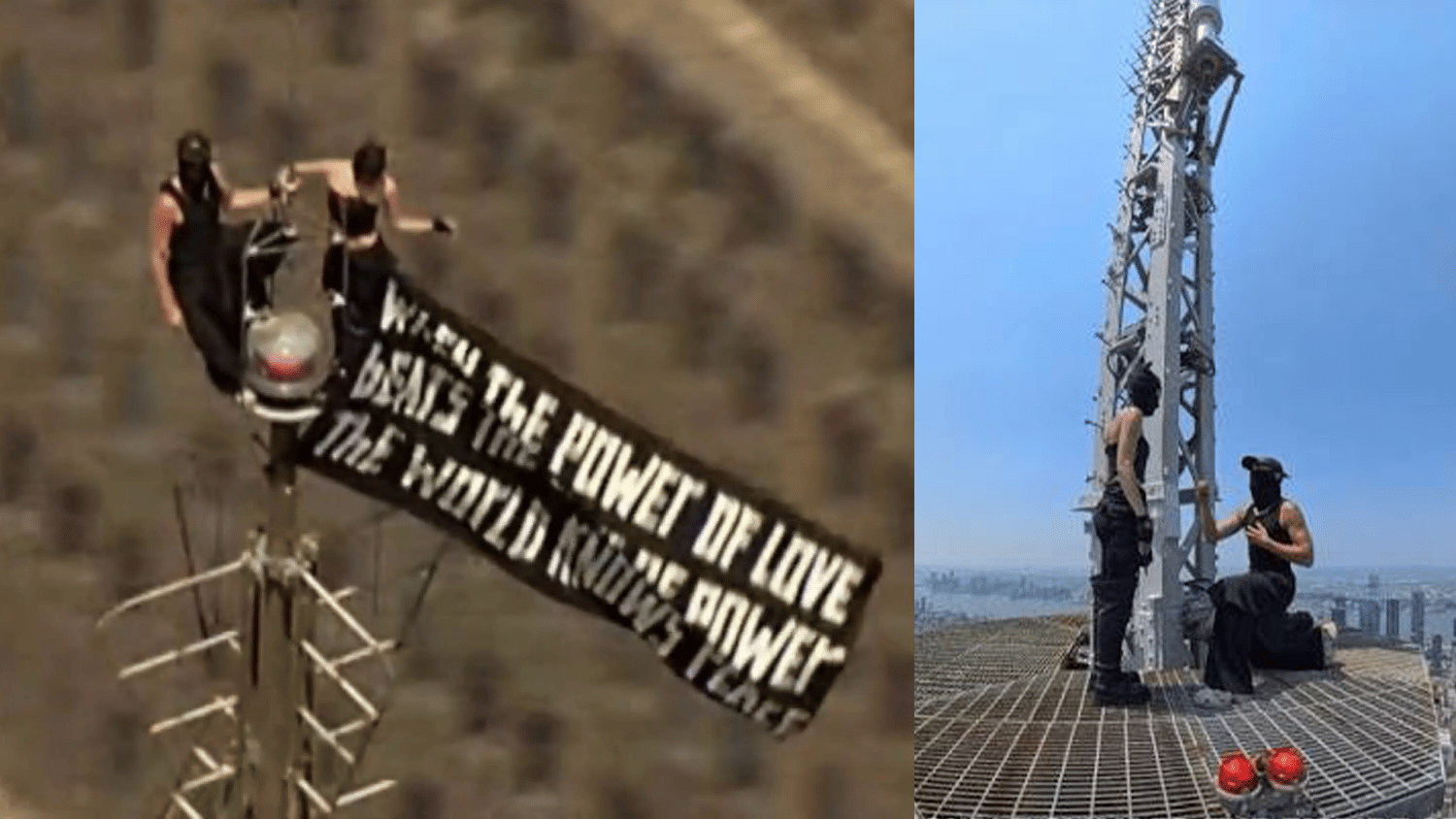
Last month, you might have heard about the two daredevils who climbed to the top of the Empire State Building to get engaged. The internet went crazy, and it sent people across the world into arguments over whether the couple should be celebrated or arrested.
Whilst at the top, they flew a banner that read “When the power of love beats the love of power, the world knows peace” which sparked an interesting conversation about the state of the modern world.
Love has always been one of life’s biggest mysteries. We all know what it feels like, but try to explain it out loud and suddenly the words don’t quite fit.
Recently, I’ve been reading Eric Fromm’s classic, The Art of Loving, and it’s completely changed the way I’m approaching love.
And in a time where we’re asking if love can exist alongside power, I think he has a very good answer.
Below are my notes and reflections; I hope they resonate with you as much as the book did with me.
I hope you enjoy,
Lewis
5 ‘Levels’ of Love
In The Art of Loving, Fromm describes how we’re all haunted by a basic problem.
We are all gifted with the ability of self-awareness – we are life being aware of itself.
But this gift creates a psychological separation between ourselves and the rest of the world.
This separation is the cause of all of our anxieties and our deepest need is to overcome this feeling to return to a place of unity and ‘oneness’.
Without this return to a sense of unity, a sense of belonging and safety, we will drift away into complete isolation and insanity.
Fromm suggests there are five main ways that we will attempt to overcome this separateness:
- Orgiastic states → emergency escape tool (short, intense relief)
- Pseudo‑union → conformity tool (stable but shallow belonging)
- Creative activity → productive tool (union with the world, not with people)
- Symbiotic fusion → dependency tool (union at the cost of freedom)
- Mature love → developmental tool (union that encourages growth)
I won’t go into the details of each, but what’s important to know is that it is only with mature love that we find a sustainable solution to our feeling of separateness.
It is only by encouraging our own growth alongside extending ourselves to others, which produces a sense of union whilst maintaining our sense of independent identity; the highest form of love.
Yet, in the modern day, we have completely lost any sense of ‘higher’ or ‘lower’ actions, and so we slowly default to the lowest levels, bingeing on the low-hanging fruit, prioritising the short-term highs and quick fixes.
Love vs Power
The first four ‘levels’ all produce this short-term, fleeting sense of unity. But our relief is only temporary, and we soon return to feeling alone; a constant rollercoaster of highs and lows.
Orgiastic states are the cheapest forms of union. These can include any form of manufactured trance-like states from drugs to prostitution. They’re easily produced and replicated, which makes them extremely marketable.
But when external markets become the core solution to meet people’s deepest needs and desires, our relief quickly becomes our poison, which leads to addiction and dependency.
And where dependency exists, power dynamics are formed and abuse often closely follows, creating campaigns that exploit our insecurities; that take advantage of our deepest fear of separateness.
In a capitalist society, those who control the most attractive solution to our deepest fear, become the most powerful in the economy.
And when control is sold to the highest bidder, society starts prioritising money over love, and the system designed to regulate our markets now starts to regulate our emotions and relationships.
Love & Capitalism
I want to be clear, capitalism is not the enemy. It is not flawed in an economic sense. But the problem is that we are now also using it as a social system.
Where economic systems regulate our markets, social systems are supposed to redistribute the power away from the highest economic earners.
But when our whole social organisation is based on each one seeking his own financial advantage, mature love has no place.
Mature love cannot be productised. No market can produce mature love; it is a human output, not an economic output. But when the capitalist powerhouses begin to overpower the social systems, the higher levels of love receive no attention and mature love becomes a lost art of the past.
It is not the case that love cannot exist within capitalism. It is just that we spend so much time competing for economic power that we have completely lost the knowledge and interest in the social art of love.
And therefore it is our love for power that has completely drowned out the power of love in modern society.
Returning to Love
But all is not lost.
The natural tension between love and power is still in play, and there is one key factor that can rebalance the scales: choice.
See, power can only exist for as long as we surrender to it. For as long as we prioritise economic values over social connections, we are surrendering to the capitalist system.
But each of us has a choice. Each of us can choose to live differently.
We can disempower an economy from the inside out. We can choose to value love over power and reinforce a social system that has lost its voice.
It is by consciously choosing the higher form of mature love in our own lives, by actively encouraging growth rather than profiting from insecurity, that we can each reclaim the power to love.
And that choice takes courage. But like all forms of art, it is that expression of courage that makes life so beautiful.
So I’ll leave you with a final question: do you have the courage to live a life of mature love?
Dare you practise the art of loving?
As always, thank you for reading my musings and refections. If they resonate, please reach out and continue the discussion.
Big love, Lewis x
PS. If you’d like to learn more about encouraging your own growth through daily practises, I include a step-by-step framework in my book Life On Your Terms
Leave a Reply